
Introduction: The Convergence of Two Transformative Technologies
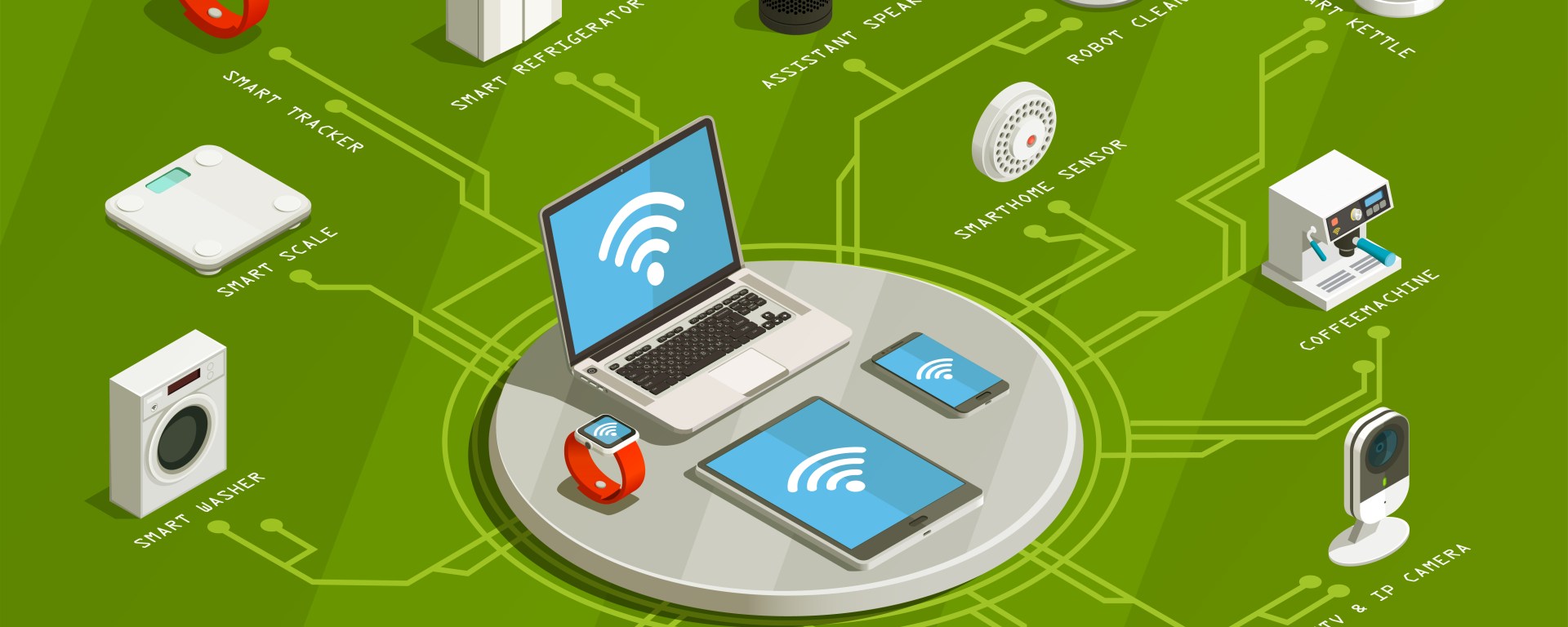
The Internet of Things (IoT) has revolutionized how we interact with the physical world, connecting billions of devices that collect, transmit, and act upon data in real-time. From smart home systems and industrial sensors to connected vehicles and wearable health monitors, IoT ecosystems generate unprecedented volumes of data that drive automation, insights, and efficiency. Yet this proliferation of connected devices also creates significant security, privacy, and trust challenges that traditional centralized architectures struggle to address.
Simultaneously, blockchain technology has emerged as a powerful solution for decentralized trust, data integrity, and transparent transactions. Originally developed for cryptocurrency applications, blockchain’s capabilities extend far beyond digital currency to solve fundamental problems in distributed systems precisely the challenges faced by IoT ecosystems.
The integration of IoT and blockchain represents a convergence that addresses IoT’s most critical vulnerabilities while unlocking new capabilities. Blockchain’s decentralized architecture eliminates single points of failure, immutable ledgers ensure data integrity and auditability, cryptographic security protects device identity and communications, smart contracts enable autonomous device interactions, and distributed consensus mechanisms establish trust without centralized authorities.
This comprehensive guide explores how IoT and blockchain integration creates secure, trustworthy connected device ecosystems, examines practical implementation approaches, and provides strategic guidance for organizations seeking to leverage this powerful combination.
Understanding the IoT Security Challenge
The Vulnerability Landscape of Connected Devices
As IoT deployments scale across industries, security vulnerabilities multiply. Traditional IoT architectures face critical challenges:
Device Authentication and Identity Management: With billions of connected devices, ensuring each device is authentic and authorized represents enormous complexity. Compromised devices can impersonate legitimate sensors, inject false data, launch attacks on other systems, and create backdoors for network infiltration.
Data Integrity and Tampering: IoT sensors generate data that drives critical decisions from industrial automation to healthcare monitoring. Without robust integrity mechanisms, malicious actors can manipulate sensor readings, alter historical data, inject false information, and corrupt analytics and decision systems that rely on IoT data.
Centralized Architecture Vulnerabilities: Traditional IoT systems rely on centralized servers and cloud platforms creating single points of failure, concentration of data increasing breach impact, scalability bottlenecks as device counts grow, and vendor lock-in limiting flexibility and control.
Privacy and Data Ownership: IoT devices collect sensitive personal and operational data raising questions about who owns the data, who can access and monetize it, how consent is managed, and how privacy is protected across device lifecycles.
Lack of Transparency and Auditability: Many IoT systems operate as black boxes where data flows aren’t visible, changes aren’t traceable, accountability is difficult to establish, and compliance verification is challenging.
These vulnerabilities aren’t theoretical they’ve manifested in real-world incidents including massive DDoS attacks using compromised IoT devices, industrial sabotage through sensor manipulation, privacy breaches from unsecured cameras and microphones, and healthcare risks from manipulated medical device data.
Why Traditional Security Approaches Fall Short
Conventional security measures prove insufficient for IoT ecosystems because devices have limited computational resources for encryption, firmware updates are difficult to distribute reliably, diverse device types lack common security standards, long device lifecycles (10+ years) outlast security protocols, remote deployment locations make physical security difficult, and massive scale makes traditional authentication mechanisms impractical.
Professional IoT app development services must address these inherent limitations through architectural innovation precisely where blockchain integration provides transformative value.
How Blockchain Addresses IoT Security Challenges
Decentralized Device Identity and Authentication
Blockchain provides robust solutions for IoT device identity management through decentralized identifiers (DIDs) giving each device a unique, cryptographically verifiable identity, public key infrastructure (PKI) enabling device authentication without centralized certificate authorities, distributed ledgers recording device registration and lifecycle events, and immutable identity records preventing unauthorized device replacement or impersonation.
This approach eliminates centralized identity databases as attack targets, enables peer-to-peer device authentication, supports scalability through distributed validation, and provides transparency into device provenance and history.
Immutable Data Integrity and Audit Trails
Blockchain’s immutable ledger ensures IoT data integrity by creating cryptographic hashes of sensor readings stored on-chain, timestamping data creation preventing retroactive manipulation, distributed validation where multiple nodes verify data authenticity, and permanent audit trails enabling compliance verification and forensic analysis.
For critical applications industrial control systems, healthcare monitoring, financial transactions, supply chain tracking this immutability provides assurance that data hasn’t been tampered with, offering legal and regulatory defensibility.
Distributed Architecture Eliminating Single Points of Failure
Blockchain’s decentralized nature transforms IoT architecture by distributing data across multiple nodes preventing single point failures, enabling peer-to-peer communication reducing reliance on centralized servers, providing fault tolerance where systems continue operating even if nodes fail, and creating censorship resistance ensuring data availability.
This resilience is particularly valuable for mission-critical IoT deployments in industrial automation, smart cities, healthcare, and defense applications where continuous operation is essential.
Smart Contracts for Autonomous Device Interactions
Smart contracts self-executing code on blockchain networks enable sophisticated IoT automation including automated device provisioning, condition-based actions triggering without human intervention, micropayments between devices, automated compliance enforcement, and machine-to-machine (M2M) transactions.
For example, an IoT smart lock could automatically grant access when blockchain records show payment received, or industrial sensors could automatically order replacement parts when predictive maintenance algorithms detect degradation all without centralized coordination.
Privacy Through Selective Disclosure
Blockchain enables privacy-preserving IoT through zero-knowledge proofs allowing data validation without revealing underlying information, encrypted data storage with selective decryption, granular access control through smart contracts, and consent management recorded on immutable ledgers.
Individuals can prove sensor data meets certain criteria (temperature within range, location within boundary) without revealing exact values, balancing privacy with verification needs.
Practical IoT and Blockchain Integration Architectures
Hybrid Architectures: Combining On-Chain and Off-Chain Components
Most practical implementations use hybrid architectures recognizing that storing all IoT data on-chain is impractical given volume and cost. Effective designs include:
On-Chain Components: Device identities and registration, data hashes and timestamps for integrity verification, smart contracts governing device interactions, access control policies, and audit logs of critical events.
Off-Chain Components: High-frequency sensor readings stored in traditional databases or distributed storage, real-time analytics and processing, visualization and user interfaces, and integration with enterprise systems.
Integration Layer: API integration solutions connecting on-chain and off-chain components, validation services verifying data against blockchain records, event triggers translating blockchain events to application actions, and identity services authenticating requests using blockchain identities.
Professional blockchain development services design architectures balancing security, performance, cost, and scalability requirements specific to each IoT deployment.
Public vs. Private Blockchain for IoT
Organizations implementing IoT blockchain integration choose between blockchain types:
Public Blockchains (Ethereum, etc.): Public networks provide maximum decentralization and transparency, immutability backed by global consensus, and interoperability with other blockchain applications, but face challenges including variable transaction costs, limited throughput for high-volume IoT data, and privacy concerns from public visibility.
Private/Permissioned Blockchains (Hyperledger Fabric, Corda): Private networks offer higher throughput supporting more transactions, predictable costs and performance, privacy through permissioned access, and customizable consensus mechanisms, but trade off decentralization for efficiency and require governance frameworks for node operators.
Consortium Blockchains: Industry consortiums share blockchain infrastructure providing balanced decentralization among known participants, shared costs across organizations, industry-specific governance, and standardized protocols for interoperability.
Blockchain consulting companies help organizations select appropriate blockchain types based on trust requirements, performance needs, privacy constraints, cost considerations, and industry regulations.
IoT-Specific Blockchain Platforms
Several blockchain platforms target IoT use cases specifically:
IOTA: Uses a directed acyclic graph (DAG) architecture called Tangle instead of traditional blockchain, enabling zero-fee transactions, high scalability for IoT volumes, offline transaction capability, and quantum-resistant cryptography. IOTA particularly suits machine-to-machine micropayments and data marketplaces.
VeChain: Focuses on supply chain and IoT tracking with enterprise partnerships, dual-token economics separating utility and value, quality assurance tracking, and anti-counterfeiting features.
IoTeX: Provides privacy-focused IoT blockchain with lightweight protocols for resource-constrained devices, privacy-preserving analytics, and cross-chain compatibility.
Blockchain developer services with IoT expertise help organizations navigate these platforms and select optimal technologies for specific use cases.
Industry Applications of IoT-Blockchain Integration
Supply Chain and Logistics
Supply chain management represents one of the most compelling IoT-blockchain use cases:
End-to-End Traceability: IoT sensors track products through the supply chain temperature, humidity, shock, location with readings hashed to blockchain creating immutable records. This enables origin verification, condition monitoring, quality assurance, counterfeit prevention, and recall management.
Automated Compliance: Smart contracts automatically verify compliance with shipping conditions, temperature requirements, handling protocols, and regulatory standards, triggering alerts when violations occur and creating audit trails for regulators.
Transparent Provenance: Consumers can verify product authenticity, view complete journey from origin to shelf, confirm ethical sourcing, and validate quality certifications all backed by tamper-proof IoT data.
Companies like Walmart, Maersk, and De Beers use IoT-blockchain integration for food safety tracking, shipping container monitoring, and diamond provenance verification respectively.
Smart Cities and Infrastructure
Urban IoT deployments benefit from blockchain integration:
Energy Grid Management: Smart meters record consumption on blockchain enabling peer-to-peer energy trading, automated billing, grid balancing, and transparent carbon credit tracking. Blockchain ensures meter readings haven’t been manipulated and enables microgrids to operate autonomously.
Water Management: IoT sensors monitoring water quality, pressure, and flow record data on blockchain for regulatory compliance, leak detection, consumption tracking, and quality assurance.
Traffic and Transportation: Connected vehicles and traffic sensors share data via blockchain for congestion pricing, parking management, autonomous vehicle coordination, and incident response with privacy protections for vehicle owners.
Waste Management: Smart bins and collection vehicles use blockchain for route optimization, fill-level monitoring, recycling verification, and carbon footprint tracking.
Industrial IoT (IIoT) and Manufacturing
Industrial applications demand security and reliability that blockchain provides:
Predictive Maintenance: IoT sensors monitoring equipment vibration, temperature, and performance record data on blockchain creating immutable maintenance histories, automated work order generation when thresholds are exceeded, parts ordering through smart contracts, and warranty claim verification.
Quality Control: Production line sensors track manufacturing parameters with blockchain records ensuring compliance with specifications, tamper-proof batch records, automated quality certifications, and recall traceability.
Asset Tracking: High-value industrial assets use IoT-blockchain for location monitoring, utilization tracking, maintenance scheduling, and theft prevention with immutable ownership records.
Automated Procurement: Smart contracts automatically order raw materials when IoT inventory sensors detect low levels, verify supplier delivery against blockchain records, and process payments upon confirmation.
Healthcare and Medical Devices
Healthcare IoT faces stringent security and privacy requirements that blockchain addresses:
Remote Patient Monitoring: Wearable devices and home sensors collect health metrics recorded on blockchain with patient consent management, selective disclosure to providers, immutable health records, and automated alert systems when readings exceed safe thresholds.
Medical Device Authentication: Blockchain verifies medical device authenticity preventing counterfeit devices, tracks maintenance and calibration, manages firmware updates securely, and creates device usage audit trails for regulatory compliance.
Clinical Trials: IoT devices monitoring trial participants record data on blockchain ensuring data integrity for regulatory submissions, transparent result verification, patient consent tracking, and protocol compliance monitoring.
Pharmaceutical Supply Chain: Temperature-controlled pharmaceutical shipping uses IoT sensors with blockchain verification of proper handling, counterfeit prevention, recall management, and regulatory compliance.
Agriculture and Food Safety
Agricultural IoT deployments leverage blockchain for:
Farm-to-Table Traceability: IoT sensors monitor growing conditions, harvesting, processing, and distribution with blockchain records enabling origin verification, organic certification, contamination source identification, and quality assurance.
Precision Agriculture: Soil sensors, weather stations, and drone imagery data recorded on blockchain creates immutable farming records for insurance verification, subsidy compliance, carbon credit trading, and best practice sharing.
Livestock Monitoring: Animal health sensors track conditions with blockchain records for health certifications, antibiotic usage tracking, humane treatment verification, and disease outbreak management.
Implementation Considerations and Best Practices
Selecting the Right Blockchain Platform
Organizations working with blockchain consulting companies evaluate platforms based on:
Transaction Throughput: Can the blockchain handle IoT data volumes? High-frequency sensors may generate thousands of readings per second. Solutions include off-chain data storage with on-chain hashing, data aggregation before blockchain recording, and high-throughput platforms like IOTA or enterprise blockchains.
Transaction Costs: Public blockchain transaction fees can become prohibitive for high-volume IoT. Considerations include cost per transaction at scale, fee predictability for budgeting, and free or low-cost alternatives for appropriate use cases.
Latency Requirements: Real-time IoT applications require fast consensus. Evaluate block creation times, finality guarantees, and whether delays are acceptable for your use case.
Privacy and Confidentiality: Assess public vs. private blockchain based on data sensitivity, encryption capabilities, zero-knowledge proof support, and regulatory compliance needs.
Scalability and Future Growth: Ensure the platform can scale with device growth, geographic expansion, and increasing data volumes.
Developing IoT-Blockchain Applications
Professional IoT app development services in India and globally follow best practices:
Device-Side Implementation: Implement lightweight clients on resource-constrained devices, edge processing to aggregate data before blockchain submission, secure key storage using hardware security modules, and over-the-air update mechanisms for security patches.
API Integration Solutions: Create robust APIs connecting IoT devices to blockchain networks, implement API integration solutions for enterprise system connectivity, develop middleware translating between protocols, and establish monitoring and alerting for integration health.
Smart Contract Development: Design contracts governing device interactions, implement thorough testing and security audits, establish upgrade mechanisms for evolving requirements, and create governance processes for contract changes.
User Interface and Experience: Develop applications that abstract blockchain complexity from end users, provide transparency into blockchain verification, enable granular permission management, and deliver responsive performance despite blockchain latency.
Security Considerations
While blockchain enhances IoT security, implementations require careful design:
Key Management: Secure generation and storage of cryptographic keys, key rotation policies, recovery mechanisms for lost keys, and hardware security modules for critical applications.
Smart Contract Security: Professional smart contract audits by blockchain developer services, formal verification for critical contracts, bug bounty programs encouraging security research, and upgrade mechanisms for vulnerability remediation.
Network Security: Protect against Sybil attacks in consensus mechanisms, implement DDoS resistance, secure node communications, and monitor for anomalous behavior.
Privacy Protection: Implement data minimization storing only essential information on-chain, use encryption for sensitive data, leverage zero-knowledge proofs where appropriate, and establish consent management frameworks.
Regulatory and Compliance Considerations
IoT-blockchain implementations must address regulatory requirements:
Data Protection Regulations: GDPR “right to be forgotten” conflicts with blockchain immutability, requiring careful architecture where personal data is stored off-chain with only hashes on blockchain, consent is managed through smart contracts, and data access is controlled granularly.
Industry-Specific Regulations: Healthcare (HIPAA), financial services (PCI-DSS), and critical infrastructure sectors have specific requirements that blockchain implementations must satisfy through audit trails and compliance reporting, data residency and sovereignty controls, and certification and accreditation processes.
Export Controls: Cryptographic capabilities in blockchain may face export restrictions requiring compliance verification and appropriate licensing.
API Integration Solutions for IoT-Blockchain Ecosystems
Building Seamless Connectivity
Effective IoT-blockchain integration requires sophisticated API integration solutions connecting disparate systems:
Device-to-Blockchain APIs: REST or MQTT APIs allowing devices to submit data to blockchain networks, retrieve blockchain-verified information, execute smart contract functions, and query device identity and permissions.
Blockchain-to-Enterprise APIs: Integration with ERP, CRM, and business intelligence systems, real-time event streaming from blockchain to applications, data synchronization between blockchain and traditional databases, and reporting APIs for compliance and analytics.
Cross-Chain Integration: APIs enabling interoperability between different blockchains, bridging between public and private networks, and supporting multi-blockchain architectures.
API integration solutions companies like Pearl Organisation design comprehensive integration architectures ensuring data flows securely between IoT devices, blockchain networks, and enterprise applications while maintaining performance, reliability, and security.
API Design and Development Best Practices
Professional API design and development for IoT-blockchain systems includes:
RESTful Design Principles: Resource-oriented endpoints, standard HTTP methods, consistent naming conventions, and stateless request handling.
Security and Authentication: OAuth 2.0 or API key authentication, rate limiting to prevent abuse, encryption for data in transit, and role-based access control.
Performance Optimization: Caching strategies for frequently accessed data, asynchronous processing for blockchain transactions, connection pooling, and compression for large payloads.
Documentation and Developer Experience: Comprehensive API documentation, SDKs for popular programming languages, sandbox environments for testing, and code examples for common use cases.
Monitoring and Observability: Real-time monitoring of API performance, error tracking and alerting, usage analytics for capacity planning, and distributed tracing for debugging.
The Role of Pearl Organisation in IoT-Blockchain Solutions
Comprehensive IoT App Development Services
Pearl Organisation provides end-to-end IoT app development services integrating blockchain security and trust capabilities. Our comprehensive approach includes:
IoT Strategy and Architecture: We work with clients to identify high-value IoT use cases, design scalable architectures, select appropriate sensors and connectivity, plan data flows and analytics, and assess blockchain integration opportunities.
Custom IoT Application Development: Our development services create device firmware and embedded software, cloud platforms for device management and data processing, mobile and web applications for user interaction, analytics and visualization dashboards, and integration with existing enterprise systems.
Blockchain Integration Services: As experienced blockchain development services providers, we integrate blockchain capabilities into IoT solutions through platform selection aligned with requirements, smart contract development for device automation, API integration solutions connecting systems, security implementation and auditing, and hybrid architecture design balancing on-chain and off-chain components.
IoT App Development Services India: With development centers in India and global reach across 150+ countries, we provide cost-effective, high-quality IoT solutions leveraging India’s exceptional engineering talent while serving clients worldwide.
Blockchain Expertise Powering Secure IoT
Our blockchain app development services bring deep expertise to IoT-blockchain integration:
Multi-Platform Experience: We work with diverse blockchain platforms including Ethereum for smart contracts and DeFi integration, Hyperledger Fabric for enterprise permissioned networks, IOTA for IoT-specific requirements, and custom blockchain solutions for unique needs.
Smart Contract Development: Our blockchain developer services include smart contract design and development, comprehensive security auditing, formal verification for critical applications, and ongoing maintenance and upgrades.
Blockchain Consulting: Our blockchain consulting companies expertise helps organizations navigate strategic blockchain decisions, assess integration opportunities, evaluate platform options, plan implementation roadmaps, and establish governance frameworks.
API Integration Excellence
Pearl Organisation’s API integration solutions company capabilities ensure seamless connectivity:
Custom API Development: We design and develop RESTful APIs connecting IoT devices to blockchain networks, integrate with enterprise systems (ERP, CRM, analytics), create developer-friendly SDKs, and provide comprehensive documentation.
API Design and Development: Following best practices for security, scalability, and developer experience, we create APIs that abstract complexity while providing powerful capabilities.
Integration Architecture: We design comprehensive integration strategies addressing data synchronization, event-driven architectures, microservices patterns, and hybrid cloud deployments.
End-to-End Implementation Support
Our IoT-blockchain projects include:
Proof of Concept Development: Rapid prototypes validating technical feasibility, demonstrating business value, testing integration approaches, and gathering stakeholder feedback.
Production Implementation: Scalable architecture deployment, security hardening and auditing, performance optimization, user training and documentation, and phased rollout strategies.
Ongoing Support and Evolution: 24/7 monitoring and support, performance optimization, feature enhancements, security updates and patches, and strategic consulting for expanding use cases.
Future Trends in IoT-Blockchain Integration
Edge Computing and Blockchain
The convergence of edge computing and blockchain enables local data processing and validation, reduced latency for time-critical applications, bandwidth optimization by processing data locally, and privacy enhancement through local computation before blockchain submission.
AI and Machine Learning Integration
IoT-blockchain-AI convergence creates powerful capabilities including predictive analytics on blockchain-verified IoT data, anomaly detection identifying sensor tampering, automated decision-making through AI-powered smart contracts, and federated learning preserving privacy while training models on distributed IoT data.
5G and Enhanced Connectivity
5G networks enable massive IoT deployments with blockchain integration through support for millions of devices per square kilometer, ultra-low latency for real-time applications, network slicing for guaranteed performance, and edge computing integration for distributed processing.
Quantum-Resistant Cryptography
As quantum computing advances, IoT-blockchain systems will adopt quantum-resistant algorithms protecting long-lived IoT devices, securing blockchain networks against future threats, and enabling migration strategies for existing deployments.
Standardization and Interoperability
Industry standardization efforts will create common protocols for IoT-blockchain integration, certification frameworks for compliance, interoperability specifications enabling multi-vendor ecosystems, and best practice guidelines accelerating adoption.
Conclusion: Building the Trusted IoT Future
The integration of IoT and blockchain represents a paradigm shift in how we build and secure connected device ecosystems. Blockchain addresses IoT’s fundamental security, privacy, and trust challenges while enabling new capabilities through decentralized architecture, immutable audit trails, autonomous smart contracts, and transparent operations.
As IoT deployments scale across industries from smart cities and industrial automation to healthcare and agriculture the need for robust security, verifiable data integrity, and transparent operations becomes increasingly critical. Organizations that successfully integrate blockchain with IoT gain competitive advantages through enhanced security and trust, operational efficiencies from automation, new business models enabled by M2M transactions, regulatory compliance through immutable audit trails, and customer confidence from transparency.
However, successful implementation requires expertise spanning both domains. IoT app development services must understand blockchain capabilities and limitations. Blockchain development services must appreciate IoT’s unique constraints and requirements. API integration solutions must seamlessly connect these technologies with existing enterprise systems.
Pearl Organisation brings comprehensive expertise in IoT app development services, blockchain development services, and API integration solutions positioning us uniquely to guide organizations through IoT-blockchain integration. Our experience across industries, technical platforms, and global markets enables us to deliver solutions that are secure, scalable, and aligned with business objectives.
Whether you’re exploring IoT-blockchain integration for the first time, seeking to enhance existing IoT deployments with blockchain security, or building next-generation connected ecosystems, partnering with experienced providers accelerates success while mitigating risks.
The future of IoT is decentralized, secure, and trustworthy powered by blockchain integration. Don’t let your connected device ecosystems remain vulnerable to security threats, data tampering, and centralized control. Partner with experts who understand both technologies and can architect solutions that deliver transformative value.
Contact Pearl Organisation today to explore how IoT-blockchain integration can secure your connected device ecosystems, unlock new capabilities, and position your organization at the forefront of digital innovation.
About Pearl Organisation
Pearl Organisation is a global leader in IoT app development services and blockchain development services, delivering innovative solutions across 150+ countries. As a premier IoT app development services India provider with global reach, we combine world-class engineering talent with deep expertise in emerging technologies.
Our comprehensive capabilities span custom IoT application development for connected device ecosystems, blockchain development services including smart contracts and DApp development, API integration solutions connecting disparate systems, hybrid cloud and edge computing architectures, AI and machine learning integration, cybersecurity services protecting connected systems, and end-to-end digital transformation consulting.
As experienced blockchain consulting companies and IoT specialists, we serve diverse industries including manufacturing and industrial IoT, smart cities and infrastructure, healthcare and medical devices, agriculture and food safety, logistics and supply chain, energy and utilities, and retail and consumer IoT.
Our blockchain app development services expertise spans Ethereum for smart contracts and DeFi, Hyperledger Fabric for enterprise solutions, IOTA for IoT-specific deployments, and custom blockchain platforms for unique requirements. Our blockchain developer services team brings proven experience in smart contract development and auditing, decentralized application creation, tokenomics and cryptocurrency, and blockchain consulting and strategy.
Our API integration solutions company capabilities ensure seamless connectivity between IoT devices, blockchain networks, and enterprise systems through RESTful API design and development, microservices architecture, event-driven integration patterns, and comprehensive documentation and support.
Beyond IoT and blockchain, Pearl Organisation provides application development, AI services and solutions, cloud services, CRM and ERP development, cybersecurity services, digital marketing, web development, and comprehensive digital business transformation services.
With 18,000+ delivered projects, 96% client success rate, agile development methodology, dedicated account management, and 24/7 support, Pearl Organisation is your trusted partner for IoT-blockchain integration and digital innovation.
Ready to secure your connected device ecosystem with blockchain integration? Contact Pearl Organisation today to begin your journey toward trusted, decentralized IoT.
 PEARL ORGANISATION™ MARKETING