
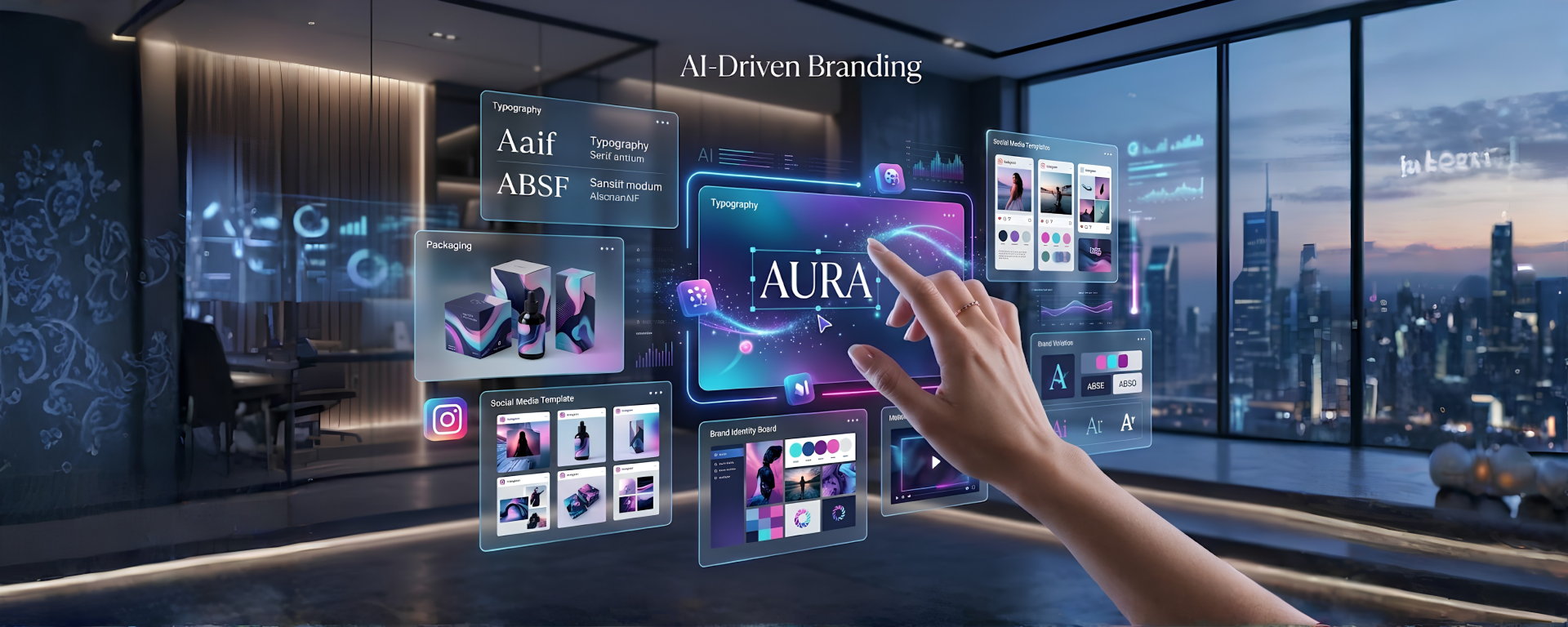
The creative industry is experiencing one of the most significant transformations in its history. Artificial Intelligence (AI) is no longer a technology reserved for software engineers and data scientists—it has become an essential tool for marketers, designers, branding agencies, content creators, advertising professionals, and creative strategists.
Today’s brands are expected to create more content, engage audiences across multiple channels, personalize customer experiences, and respond to trends faster than ever before. Meeting these expectations using traditional workflows can be time-consuming, expensive, and resource-intensive.
This is where AI is changing the landscape.
According to McKinsey, generative AI could add between $2.6 trillion and $4.4 trillion annually to the global economy, with marketing, sales, and creative functions among the biggest beneficiaries. AI-powered tools are helping businesses streamline operations, improve productivity, and unlock new levels of creativity.
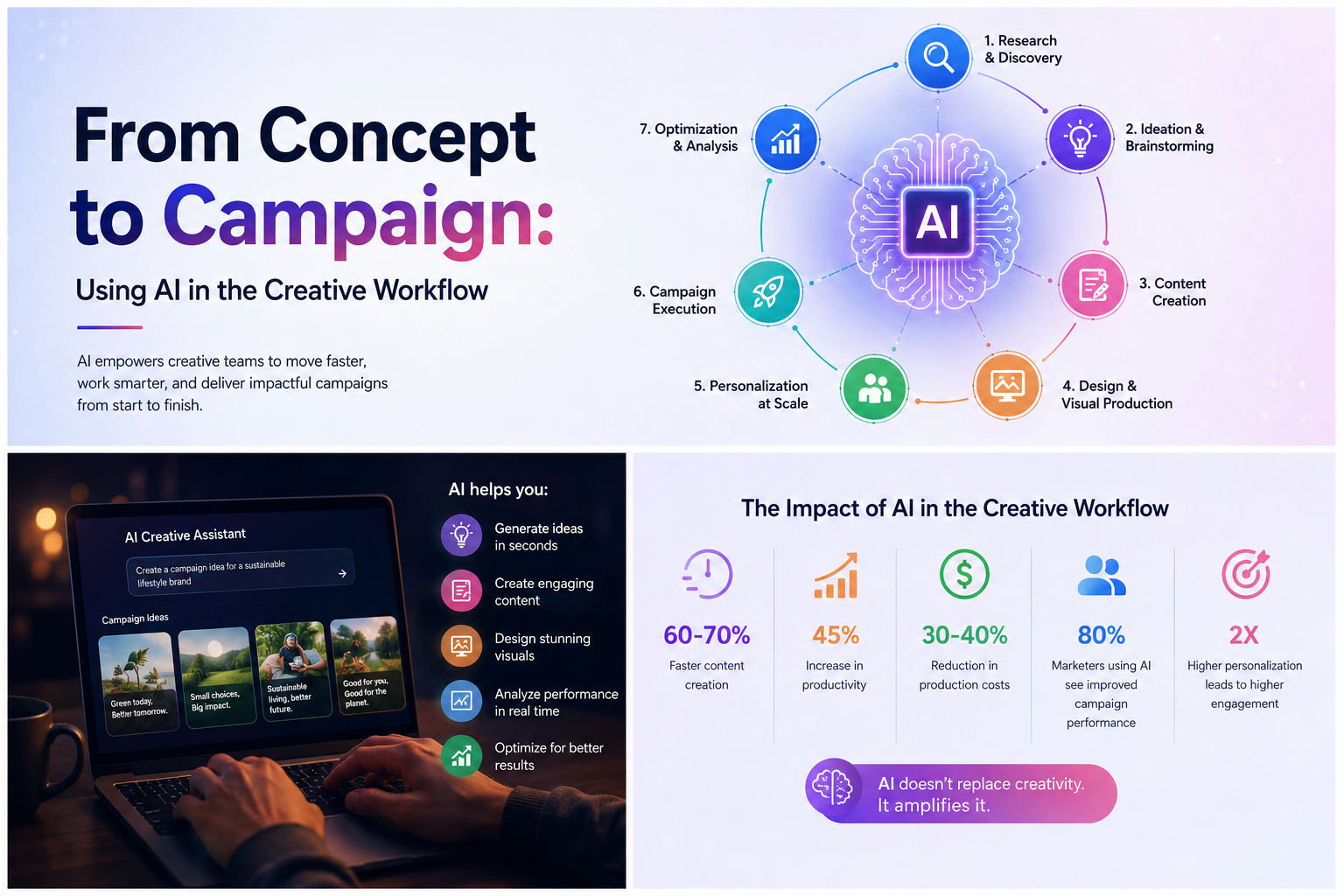
Rather than replacing creative professionals, AI serves as a powerful collaborator that assists with research, ideation, content creation, design, personalization, campaign execution, and performance optimization. The result is a more efficient and data-driven creative workflow that enables teams to move from concept to campaign faster than ever before.
In this blog, we will explore how AI is transforming every stage of the creative workflow and why forward-thinking agencies and brands are embracing AI-powered creativity.
Understanding the Modern Creative Workflow
A creative campaign typically involves multiple stages, including:
- Research and market analysis
- Idea generation and brainstorming
- Content creation
- Graphic design and visual production
- Personalization and audience targeting
- Campaign execution
- Performance monitoring and optimization
Traditionally, each of these stages required significant manual effort and collaboration between multiple departments. AI now accelerates these processes by automating repetitive tasks, generating insights from large datasets, and supporting creative decision-making.
The result is a workflow that is faster, smarter, and more scalable.
Stage 1: AI-Powered Research and Discovery
Every successful campaign begins with a deep understanding of the market, audience, and competition. Research provides the foundation upon which creative strategies are built.
AI has dramatically improved the speed and accuracy of this process.
Customer Behavior Analysis
Understanding customer behavior is one of the most valuable applications of AI.
Modern AI tools can analyze data from:
- Website interactions
- Social media engagement
- Online purchases
- Customer feedback
- Search behavior
- CRM platforms
By processing this information, AI identifies patterns that would be difficult for humans to detect manually.
For example, AI can reveal:
- Which content formats generate the most engagement
- What motivates customers to purchase
- Which customer segments are most profitable
- Where users drop off during the buying journey
These insights help creative teams build campaigns that resonate with their target audience.
Trend Identification
Consumer preferences change rapidly.
AI-powered trend analysis tools monitor millions of online conversations, search queries, social media discussions, and industry publications in real time.
This allows brands to identify:
- Emerging consumer interests
- Viral content opportunities
- Industry shifts
- Seasonal demand patterns
- Cultural conversations
By spotting trends early, brands can create timely and relevant campaigns that capture audience attention before competitors do.
Competitor Intelligence
AI tools can analyze competitor campaigns, advertising strategies, content performance, and customer engagement metrics.
Instead of spending days manually reviewing competitor activities, marketers can receive automated reports highlighting:
- High-performing content topics
- Successful advertising approaches
- Keyword opportunities
- Audience engagement patterns
This information helps agencies position their brands more effectively in the market.
Audience Insight Development
AI helps marketers create detailed audience personas by combining demographic, behavioral, and psychographic data.
These insights provide a deeper understanding of:
- Customer motivations
- Pain points
- Interests
- Preferences
- Buying triggers
As a result, creative teams can develop messaging that feels more relevant and personalized.
Stage 2: AI-Driven Ideation and Creative Brainstorming
Generating innovative ideas is one of the most challenging aspects of the creative process.
Creative blocks, limited perspectives, and time constraints can slow down campaign development.
AI helps overcome these challenges by acting as a brainstorming partner.
Campaign Concept Generation
AI can generate hundreds of campaign ideas based on specific objectives, target audiences, industries, and brand guidelines.
For example, a fitness brand launching a new product could use AI to explore campaign themes focused on:
- Personal transformation
- Community building
- Health awareness
- Performance improvement
This allows creative teams to evaluate multiple directions before selecting the strongest concept.
Tagline and Messaging Development
Creating compelling taglines often requires extensive brainstorming sessions.
AI can instantly generate multiple messaging options that align with:
- Brand voice
- Campaign goals
- Audience preferences
- Market positioning
These suggestions provide a strong starting point that creative professionals can refine further.
Storytelling Frameworks
Successful campaigns tell stories that connect emotionally with audiences.
AI can assist by suggesting:
- Narrative structures
- Emotional hooks
- Content themes
- Customer journey concepts
This helps brands create campaigns that are memorable and impactful.
Creative Exploration
Designers and marketers can use AI to explore different visual and conceptual approaches quickly.
Instead of committing to one idea early, teams can experiment with numerous possibilities before making final decisions.
This encourages innovation while reducing creative risk.
Stage 3: AI-Powered Content Creation
Content is at the heart of modern marketing.
Brands need blog articles, social media posts, email campaigns, landing pages, advertisements, video scripts, and more.
Producing this volume of content manually can be overwhelming.
AI significantly accelerates content production.
Blog and Article Writing
AI writing tools help marketers:
- Generate topic ideas
- Create outlines
- Draft content
- Suggest keywords
- Improve readability
While human editing remains essential, AI reduces the time required to create high-quality content.
This enables content teams to scale their efforts efficiently.
Advertising Copy Generation
Marketing campaigns often require multiple versions of:
- Headlines
- Calls-to-action
- Ad descriptions
- Promotional messages
AI can produce dozens of variations in seconds.
Marketers can then test different versions to identify the highest-performing content.
Social Media Content Creation
Managing social media channels requires continuous content production.
AI assists with:
- Caption writing
- Hashtag suggestions
- Content calendars
- Engagement strategies
- Platform-specific optimization
This helps brands maintain a consistent presence across multiple platforms.
Email Marketing Content
AI-powered personalization allows marketers to create email campaigns tailored to individual users.
These emails can be customized based on:
- Purchase history
- Browsing behavior
- Customer preferences
- Engagement patterns
Personalized emails often achieve higher open rates and conversion rates compared to generic campaigns.
Stage 4: AI in Graphic Design and Visual Production
Visual content plays a critical role in brand communication.
AI is transforming how designers create and optimize visual assets.
AI-Generated Imagery
Generative AI tools can create custom visuals from text prompts.
Designers can produce:
- Marketing illustrations
- Product concepts
- Advertising visuals
- Social media graphics
- Creative mockups
This accelerates the creative process and expands design possibilities.
Rapid Design Iteration
One of AI’s greatest strengths is generating multiple design variations quickly.
Designers can experiment with:
- Layouts
- Typography
- Color palettes
- Image styles
- Visual compositions
This allows teams to evaluate numerous options before finalizing a design.
Video Production Enhancement
Video content continues to dominate digital marketing.
AI-powered video tools can:
- Generate subtitles
- Create voiceovers
- Edit footage
- Produce short-form videos
- Repurpose long-form content
This reduces production costs while increasing content output.
Asset Optimization
AI can automatically:
- Remove backgrounds
- Enhance image quality
- Adjust colors
- Resize assets
- Improve resolution
These capabilities eliminate many repetitive design tasks and allow creatives to focus on higher-value work.
Stage 5: Personalization at Scale
Modern consumers expect personalized experiences.
Generic messaging is becoming less effective as customers increasingly demand content tailored to their interests and needs.
AI makes personalization scalable.
Customized Customer Messaging
AI analyzes customer data to generate personalized messages for different audience segments.
This enables brands to communicate more effectively with:
- First-time visitors
- Returning customers
- High-value clients
- Inactive users
Personalized communication improves engagement and customer satisfaction.
Dynamic Content Delivery
AI can automatically adapt content based on user behavior.
For example:
- Different website visitors may see different offers
- Email subscribers may receive customized recommendations
- Ad viewers may encounter personalized messaging
This increases relevance and conversion potential.
Geographic Localization
Global brands often need to tailor campaigns for regional markets.
AI helps localize:
- Language
- Visuals
- Cultural references
- Promotional messaging
This ensures campaigns resonate with local audiences while maintaining brand consistency.
Customer Journey Optimization
AI tracks customer interactions throughout the buying process and identifies opportunities for improvement.
Brands can use these insights to create smoother, more effective customer experiences.
Stage 6: Campaign Execution and Automation
Once creative assets are developed, AI helps streamline campaign deployment.
Automated Scheduling
AI-powered platforms determine the optimal times to publish content based on audience behavior.
This improves visibility and engagement.
Smart Audience Targeting
AI analyzes customer data to identify audience segments most likely to convert.
Advertising campaigns become more efficient because budgets are focused on high-potential prospects.
Budget Optimization
AI continuously evaluates campaign performance and reallocates spending toward the best-performing channels and audiences.
This maximizes return on investment.
Workflow Automation
Many administrative tasks can be automated, including:
- Project tracking
- Asset management
- Approval processes
- Reporting
Automation improves operational efficiency and reduces bottlenecks.
Stage 7: Real-Time Optimization and Performance Analysis
Launching a campaign is only the beginning.
Continuous optimization is essential for long-term success.
Performance Monitoring
AI tracks key performance indicators such as:
- Impressions
- Click-through rates
- Conversions
- Engagement levels
- Return on ad spend
This provides marketers with real-time visibility into campaign effectiveness.
Predictive Analytics
AI can forecast future outcomes based on historical performance and current trends.
Marketers can identify opportunities and risks before they impact results.
Conversion Optimization
AI identifies which campaign elements contribute most to conversions and recommends improvements.
This may include:
- Better headlines
- Improved targeting
- Optimized landing pages
- Enhanced creative assets
Automated Recommendations
Many AI platforms provide actionable suggestions for improving campaign performance.
These recommendations help marketers make faster and more informed decisions.
Key Benefits of AI in the Creative Workflow
Increased Productivity
AI automates repetitive tasks, allowing creative professionals to focus on strategic thinking and innovation.
Faster Time-to-Market
Campaigns that once required weeks can now be developed and launched in days.
Enhanced Creativity
AI expands creative possibilities by generating new ideas, concepts, and design directions.
Cost Efficiency
Businesses can increase output without proportionally increasing staffing or production costs.
Improved Personalization
AI enables brands to deliver highly relevant experiences to diverse audience segments.
Data-Driven Decision Making
Creative decisions are supported by real customer insights rather than assumptions.
Challenges and Considerations
While AI offers tremendous opportunities, organizations must address several challenges.
Maintaining Brand Authenticity
AI-generated content should always align with brand values, voice, and identity.
Human Oversight
Creative professionals remain essential for quality control, strategic direction, and emotional storytelling.
Copyright and Intellectual Property
Organizations must ensure compliance with content ownership and licensing requirements.
Ethical AI Usage
Responsible AI implementation requires transparency, fairness, and accountability.
Brands that establish strong governance frameworks will be better positioned to leverage AI responsibly.
The Future of AI-Powered Creativity
The future of creative work is not about humans versus AI.
It is about humans working alongside AI.
Future AI systems will become increasingly capable of:
- Predicting campaign performance
- Learning brand guidelines
- Automating repetitive production tasks
- Supporting strategic planning
- Personalizing content in real time
However, creativity, empathy, emotional intelligence, and storytelling will remain uniquely human strengths.
The most successful agencies and brands will be those that combine human creativity with AI-powered efficiency.
Conclusion
Artificial Intelligence is transforming every stage of the creative workflow—from initial research and concept development to content creation, campaign execution, and performance optimization.
By leveraging AI, brands can work faster, make smarter decisions, personalize experiences at scale, and maximize marketing effectiveness.
The organizations that embrace AI today are not simply adopting a new technology; they are building a competitive advantage for the future.
As AI continues to evolve, creative teams that learn to collaborate with intelligent tools will be better equipped to deliver innovative campaigns, stronger customer experiences, and measurable business results.
The future of creativity is not artificial—it is amplified by intelligence.

